
Your Mind Edits Reality To Match What It Already Believes
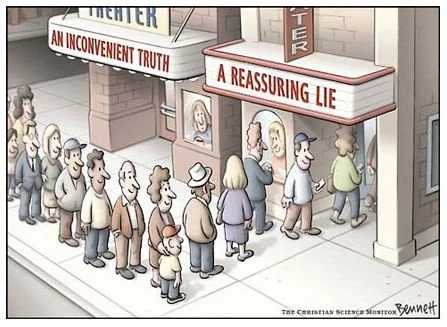
Your mind edits reality to match what it already believes.
Not in a dramatic, “you’ve lost the plot” kind of way. In a quiet, automatic, everyday kinda’ way.
You notice what fits. You skim past what doesn’t.
That’s confirmation bias in action.
For example, you make a small mistake at work. If you carry the belief “I’m not good enough to be here”… that one moment suddenly becomes “proof” that you’re not enough.
Not the 10 things you did well that day. Just the one thing that fits the story you’re telling yourself.
That’s the thing about your brain… it’s not trying to be fair. It’s trying to be efficient.
It uses what you already believe as a shortcut to interpret the world.
From a neuro-science point of view, your brain is constantly predicting what’s going on around you.
This is called predictive processing.
Instead of taking in the world as it is, your brain:
Uses past experiences to generate predictions
Filters incoming information through those predictions
Updates (or ignores) reality based on what fits
Your brain doesn’t just take in what’s happening… it fills in the gaps based on what it already expects.
Why do your thoughts feel so convincing?
If you already carry a belief like:
“I always mess things up”
“People don’t really like me”
“This person is always so rude”
Your brain will quietly start building a case. Not because it’s necessarily true. But because it’s efficient.
When we look into the neuro-science of confirmation bias, a few things are happening here:
Top-down processing: your expectations shape what you perceive
Attentional bias: your brain prioritises threat-relevant or belief-consistent information
Memory bias: your brain is quicker to store and recall experiences that match what you already believe (e.g., “people aren’t reliable” → you remember the times you were let down by others, not the times they showed up).
Add in the brain’s natural negative bias and suddenly the “evidence” feels stacked…and not so balanced.
The wild part?
Your brain isn’t trying to hurt you. It’s trying to:
Keep things predictable
Reduce uncertainty
Save energy
Rather than being accurate and giving you the full picture.
So what do you do with that?
You don’t need to “fix” your thinking or force positivity.
That usually backfires.
Instead, try this:
Get curious.
What am I noticing right now?
What might I be not noticing?
What doesn’t fit this story?
You’re not trying to replace the thought. You’re widening the lens.
Same brain. Different awareness.
When you start spotting the confirmation bias in action, something shifts.
You realise:
Thoughts can feel true without being the full truth
Your brain can build a convincing story without having all the data
And that creates space to respond differently, to see more clearly and to not automatically buy into every thought that shows up.
Your mind will always try to confirm what it already believes.
That’s not a flaw. That’s just how it works.
But you don’t have to take every thought as fact.
You can learn to spot how your mind is shaping things to fit what it already believes… not just the story it tells.
So what might you be missing?